
Lake Manyara Park
Lake Manyara Park
Located en route to Ngorongoro Crater and the Serengeti, Lake Manyara National Park is a worthwhile destination on its own. Its groundwater forests, bush plains, baobab-dotted cliffs, and algae-streaked hot springs provide remarkable ecological diversity in a compact area, teeming with wildlife and a stunning variety of birds.
The alkaline soda waters of Lake Manyara support an extraordinary array of bird life. Thousands of pink flamingos graze along the shore, creating colorful contrasts against the grey mineral backdrop. Yellow-billed storks glide and spiral on thermal currents rising from the escarpment, while herons soar against the bright sky. Even those who are not avid bird-watchers will find plenty to admire within the national park.
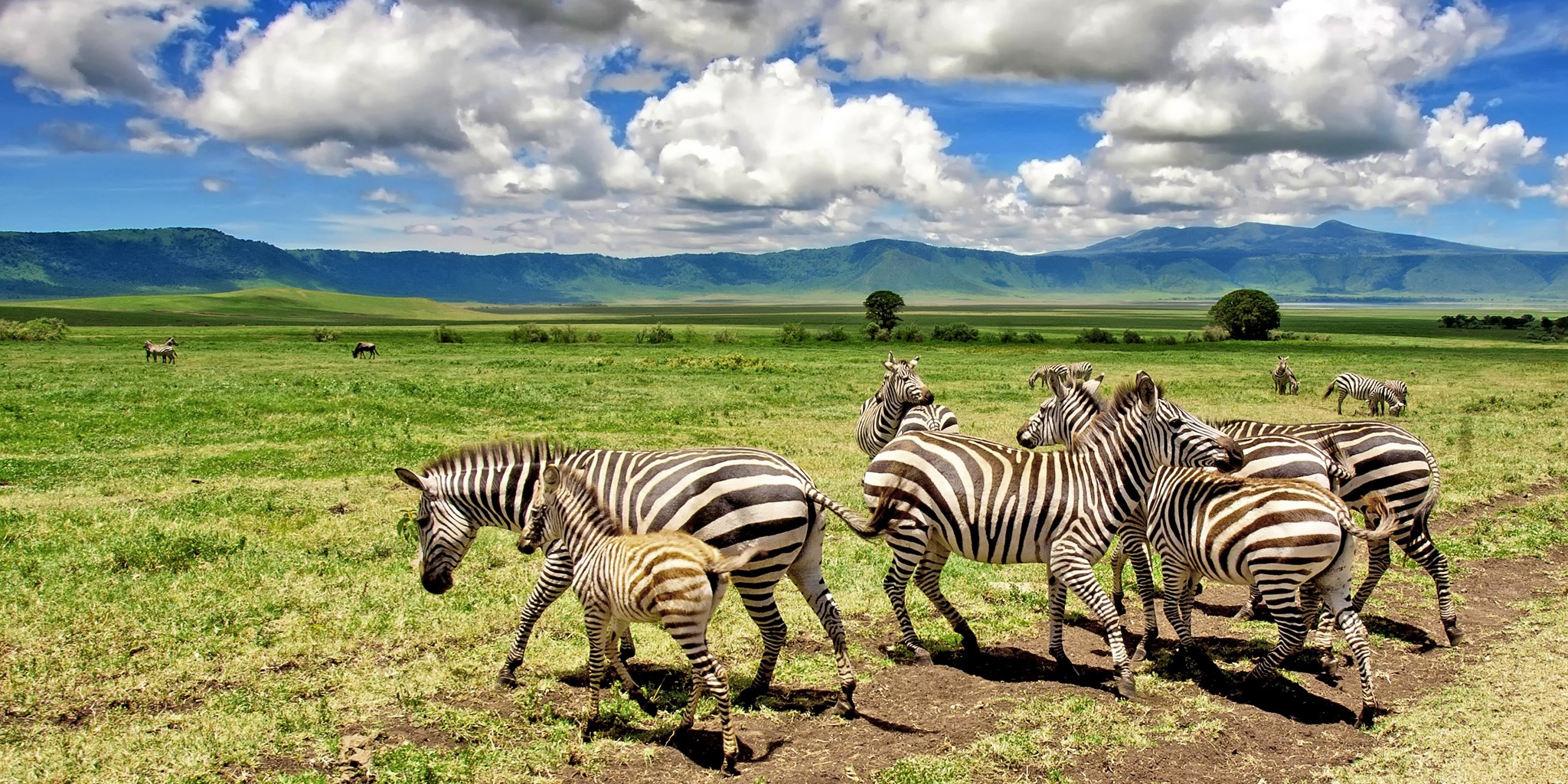
In contrast to the forest’s intimacy, the grassy floodplain offers expansive views eastward across the alkaline lake to the jagged blue volcanic peaks rising from the endless Maasai Steppes. Large herds of buffalo, wildebeest, and zebra gather on these grassy plains, along with giraffes, some of which are so dark they appear black from a distance.
Inland from the floodplain, a narrow belt of acacia woodland is the preferred habitat of Manyara’s famous tree-climbing lions and impressively tusked elephants. Banded mongoose dart between the acacias, while the small Kirk’s dik-dik forages in their shade. Pairs of klipspringer are often seen silhouetted on the rocks above a field of searing hot springs that steam and bubble near the lakeshore in the far south of the park.
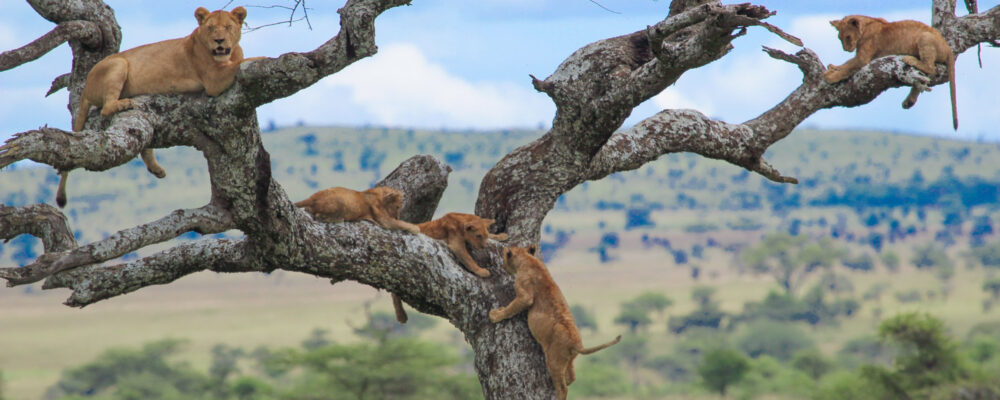
Lake Manyara’s famous tree-climbing lions are another compelling reason to visit this park. Unique in the world, these lions make their home in the ancient mahogany and elegant acacia trees during the rainy season and are a well-known but rare sight in the northern part of the park. Additionally, the park hosts the largest concentration of baboons globally, providing fascinating game viewing of large primate families.
Stretching for 50 km along the base of the rusty-gold, 600-meter high Rift Valley escarpment, Lake Manyara is a scenic gem. Ernest Hemingway praised its beauty, calling it “the loveliest I had seen in Africa.”
The compact game-viewing circuit in Manyara offers a virtual microcosm of the Tanzanian safari experience.
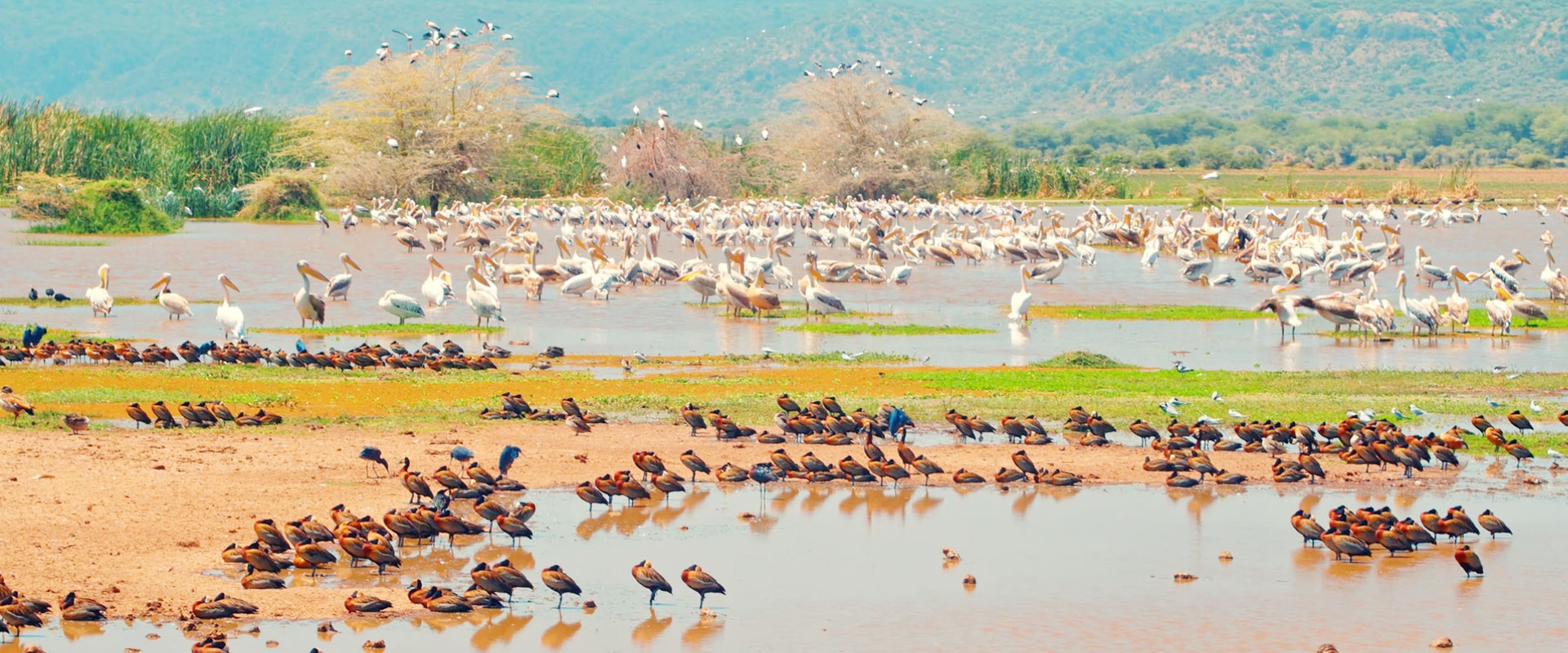
Manyara offers an ideal introduction to Tanzania’s birdlife. With over 400 species recorded, even first-time visitors to Africa can expect to observe around 100 species in a single day. Highlights include thousands of pink-hued flamingos on their perpetual migration, along with other large water birds such as pelicans, cormorants, and storks.
About Lake Manyara National Park:
- Size: 330 sq km (127 sq miles), with up to 200 sq km (77 sq miles) being the lake when water levels are high.
- Location: Northern Tanzania. The entrance gate is situated 1.5 hours (126 km/80 miles) west of Arusha along a newly surfaced road, close to the ethnically diverse market town of Mto wa Mbu.