
Mt. Kilimanjaro Weather
Mt. Kilimanjaro Weather – When is the Best Time to Climb?
The weather on Mount Kilimanjaro significantly impacts your climb and success rates. Choosing the right time to climb is crucial.
Poor weather not only diminishes the enjoyment of the trek and affects photo opportunities but also substantially increases the difficulty of the climb.
Optimal weather conditions significantly enhance your chances of reaching the summit.
Located near the equator, Mount Kilimanjaro experiences tropical weather characterized by distinct dry and rainy seasons rather than traditional summer and winter seasons.
Climbing during the wet season entails navigating through deep mud in the initial days of the trek. As altitude increases, fog and drizzle become prevalent, gradually permeating clothing, gear, and even bones.
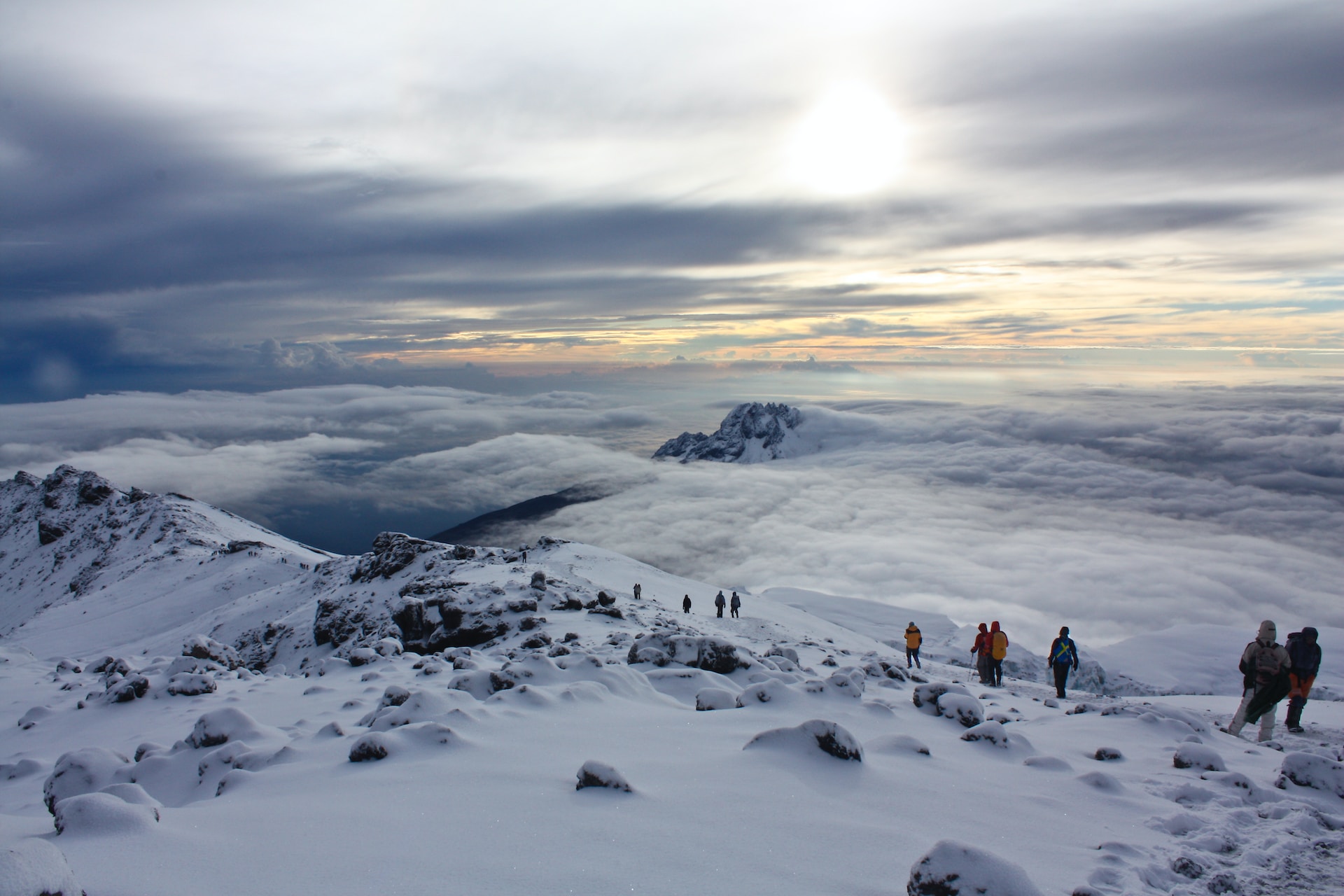
Indeed, moisture in your clothing and gear can exacerbate the cold at the summit, especially when navigating through ice and snow.
However, other factors such as temperatures, visibility, and the influx of climbers also play crucial roles. Consequently, determining the ideal time to climb Kilimanjaro isn’t straightforward.
Let’s delve into the specifics of Kilimanjaro’s weather throughout the year.
The Weather on Kilimanjaro – When to Go?
The weather patterns on Kilimanjaro vary throughout the year, influencing the climbing conditions and success rates:
April – June: This period marks the main rainy season, characterized by heavy rainfall from late March to mid-June. Climbing during this time can be challenging due to the wet conditions. Many operators avoid offering climbs in April and May due to the excessive rain.
June – August: Rainfall gradually diminishes during this time, leading to drier and clearer weather on Kilimanjaro. However, nights can be bitterly cold, despite warmer daytime temperatures. June sees fewer climbers, but the numbers increase as the season progresses.
August – October: August and September constitute the peak climbing season on Kilimanjaro. Weather conditions are generally favorable, with many clear days and relatively warmer temperatures compared to June and July. However, there may be cloud cover in the forest and moorland zones, with occasional rain in the southern routes.
October/November: Weather becomes less stable during this period, with fewer climbers on the mountain. Afternoon clouds and thunderstorms are common, but as long as climbers are prepared for occasional showers, climbing remains feasible.
November/December: November marks the beginning of the small rainy season, extending into mid-December. Temperatures drop, and rainfall increases, posing challenges for climbers.
December/January: The weeks around Christmas and New Year constitute the second peak climbing season on Kilimanjaro, despite the risk of rainfall and thick clouds in lower regions.
January-March: Mid-January to mid-March offers favorable climbing conditions, with reasonable weather, fewer climbers, and mainly dry days. Clear skies are common, with occasional brief showers. However, rain chances gradually increase towards mid-March, heralding the long rainy season.
There are a few more things worth mentiong about the weather on Kilimanjaro.
Choosing the right climbing route and being prepared for the varying weather conditions on Kilimanjaro can significantly impact your experience and success. Here are some tips to consider:
Route Selection: If you’re climbing during less ideal times or want to avoid crowds, consider routes like Rongai, Shira, or Lemosho, which typically have less traffic compared to Machame and Marangu.
Weather Awareness: Be aware that temperatures can vary drastically between day and night, especially at higher altitudes. While daytime temperatures may seem warm, nighttime temperatures can drop below freezing, even in the alpine desert.
Layering: Dress in layers to accommodate temperature fluctuations throughout the day and night. Bring clothing suitable for both warm daytime conditions and cold nighttime temperatures, including insulated jackets, hats, gloves, and thermal layers.
Summit Night Preparation: Summit night can be particularly cold, with temperatures dropping to as low as -20°C (-5F). Factor in wind chill, which can make it feel even colder, with a perceived temperature as low as -40°C. Prepare accordingly with warm, windproof clothing and gear.
Preparation and Expectations: Prepare for the worst-case scenario in terms of weather conditions, but also be mentally prepared for the challenge. Despite the cold temperatures and potentially harsh conditions, many climbers find that the experience exceeds their expectations once they’re on the mountain.
By selecting the right route, dressing appropriately for the weather, and being prepared for varying conditions, you can enhance your chances of success and enjoy a memorable climbing experience on Kilimanjaro.