
RONGAI ROUTE
Rongai Route
Opting for the Rongai route to ascend Mount Kilimanjaro used to promise a tranquil trek away from the crowds. Marketed as a remote wilderness experience, it largely lived up to its reputation for much of the year.
However, caution is warranted: in recent years, the Rongai route has witnessed a surge in popularity.
During the peak season from August to mid-October, particularly if your climb aligns with the usual group departure day, you may find yourself amidst a sizable crowd.
(Most groups set off on Sundays, allowing participants to wrap up work on Friday, arrive on Saturday, commence the climb on Sunday, and return to the office by the following Monday.)
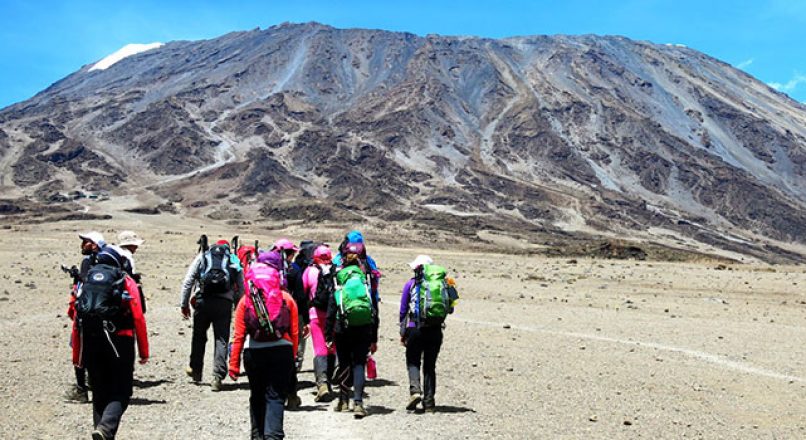
Nonetheless, Rongai remains significantly quieter than the popular Machame or Marangu trails. It boasts several advantages that position it as a prime choice:
- Rongai is the most straightforward route up Kilimanjaro, with success rates rivaling or even surpassing those of Marangu.
- It’s the sole route that approaches Kilimanjaro from the north, offering a unique perspective as you ascend and descend.
- The northern side of Kilimanjaro is notably drier, minimizing encounters with mud and drizzle during the initial days, a common occurrence on other routes.
However, there are drawbacks to consider. Firstly, reaching the northern side of Kilimanjaro requires a longer drive, incurring additional costs and making Rongai comparatively more expensive than a six-day trail on Machame or Marangu. Secondly, the Rongai route is often perceived as less scenic, particularly on the first day when trekking through open terrain instead of dense rainforest. However, the lush rainforest awaits during the descent, ensuring you don’t miss out on its beauty.
For a detailed description of the Kilimanjaro climb on the Rongai route, continue reading below.
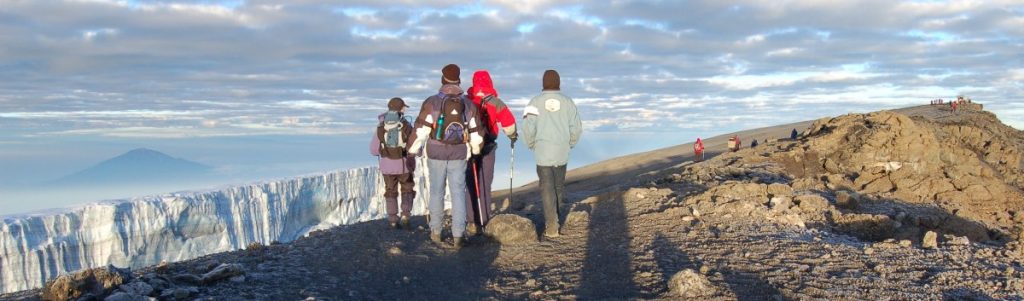
Rongai Route Itinerary
The Rongai route offers various trek durations, ranging from five to seven days.
The six-day trek typically diverges from the five-day version after day two, taking a detour towards Mawenzi Peak. This variation provides a more gradual ascent, ensuring better acclimatization. Meanwhile, all seven-day treks include the detour to Mawenzi.
Outlined below is the itinerary for the six-day trek with the detour via Mawenzi Tarn, renowned for its breathtaking scenery.
Starting Point: Nalemoru (approximately 1950 m/6400 ft)
Duration: 6 days
Day 1 – Nalemoru (1950 m/6400 ft) – First Cave Campsite (2650 m/8700 ft)
- Walking distance: 6.5 km/4 miles
- Walking time: 3-4 hours
- Altitude gain: 700 m/2300 ft
Day 2 – First Cave Campsite – Kikelewa Caves (3600 m/11810 ft)
- Walking distance: 9 km/5.6 miles
- Walking time: 6-7 hours
- Altitude gain: 950 m/3110 ft
Day 3 – Kikelewa Caves – Mawenzi Tarn (4330 m/14210 ft)
- Walking distance: 6 km/3.7 miles
- Walking time: 3-4 hours
- Altitude gain: 730 m/2400 ft
- Afternoon acclimatization walk to approximately 4500 m/14760 ft
Day 4 – Mawenzi Tarn – Kibo Huts (4700 m/15420 ft)
- Walking distance: 9 km/5.6 miles
- Walking time: 4-5 hours
- Altitude gain: 370 m/1215 ft
Day 5 – Summit attempt via Gilman’s Point (5700 m/18700 ft) to Uhuru Peak (5895 m/19340 ft) and descent to Horombo Huts (3700 m/12200 ft)
- Walking distance: 5 km/3.1 miles ascent + 15 km/9.3 miles descent
- Walking time: 5-6 hours ascent + 1-2 hours up, 5-6 hours down (overall walking time may vary from 10 – 16 hours)
- Altitude gain: 1000 m/3280 ft (Gilman’s Point) or 1195 m/3920 ft (Uhuru Peak)
- Descent: 2195 m/7200 ft
Day 6 – Horombo Huts – Marangu Gate
- Walking distance: 20 km/12.5 miles
- Walking time: 5 hours
- Descent: 1840 m/6040 ft
Climbing Mt. Kilimanjaro – Rongai Route – Day 1
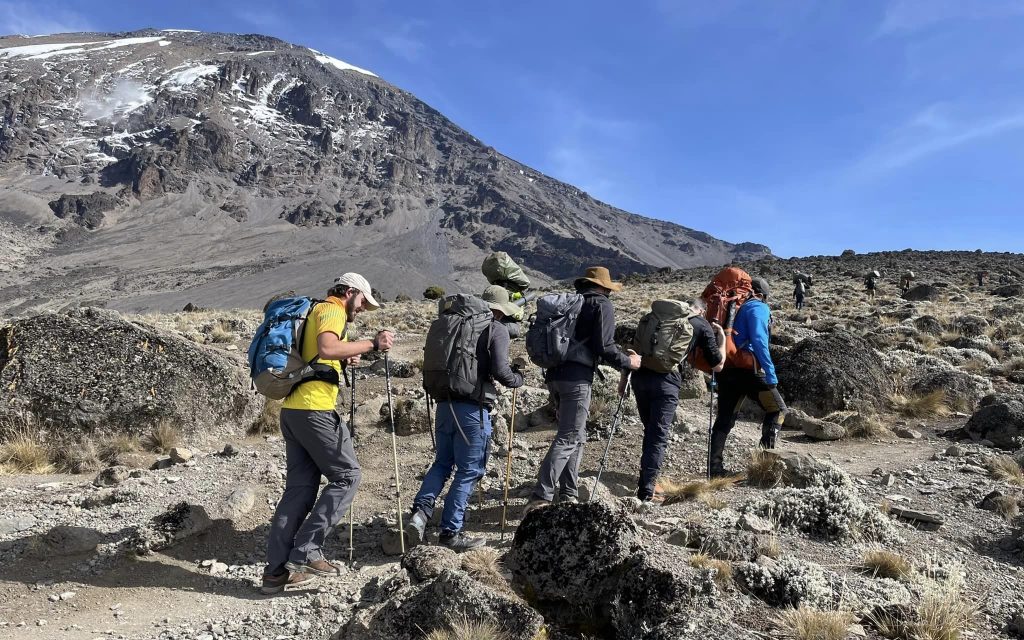
The journey on the Rongai route begins with a transfer from your hotel to the village of Nalemoru, which serves as the starting point for the trek. Although the route was originally named after the border village of Rongai, the starting point was later relocated to Nalemoru near Loitokitok. Consequently, you may encounter various names such as Rongai route, Loitokitok route, or even Nalemoru route, but rest assured, they all refer to the same trail.
The drive from Moshi or Marangu, circumventing Kilimanjaro, typically takes two to three hours and offers picturesque views of rural Chagga villages in the foothills. However, the journey can be quite bumpy due to the rough track, leaving everything inside the vehicle evenly coated with dust.
Upon arrival at Nalemoru, you may enjoy your packed lunch while waiting for your gear to be distributed among the porters and for the group to prepare. The initial section of the Rongai route traverses cypress plantations before leading through open terrain with sporadic patches of montane forest. While the scenery on the first day may not be particularly memorable, the route offers opportunities for wildlife sightings, including prolific birdlife and colobus monkeys.
As you progress, the sparse forest gives way to the dominant heather vegetation, which characterizes much of the journey on this route. The day’s trek concludes at the First Cave Campsite, where your porters would have already set up tents and perhaps even prepared hot drinks and popcorn. Despite lacking significant features, the campsite may be bustling with climbers and staff during peak seasons. However, during quieter periods, it offers a serene wilderness experience amidst abundant wildlife.
Climbing Mt. Kilimanjaro – Rongai Route – Day 2
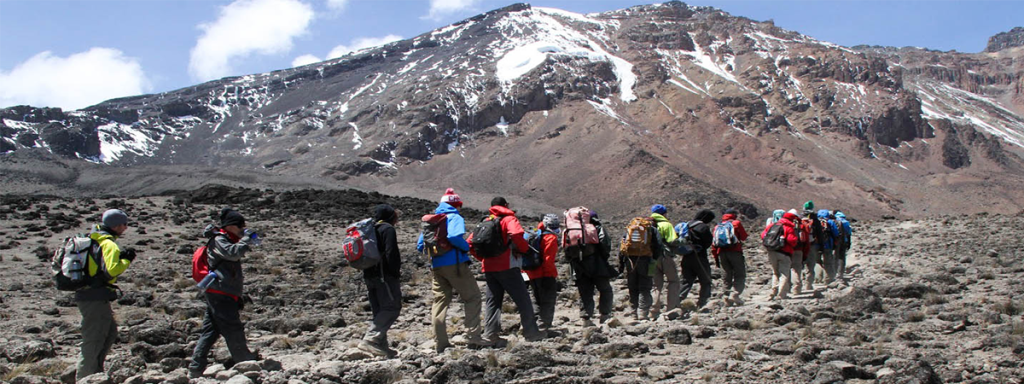
Until lunchtime, all groups on the Rongai route follow the same path, traversing moorland covered in heather on a gradually steepening trail. The designated lunch spot, known as the Second Cave Camp at 3450 m/11320 ft, serves as a point where some may choose to stop for lunch, while others may decide to continue hiking or even set up camp.
For six-day treks without the Mawenzi detour, this may serve as a camping site for the night, followed by a night at the Third Cave Camp (3875 m/12715 ft) before proceeding to Kibo Huts (4700 m/15420 ft). However, the recommended route, especially for better acclimatization, involves taking the Mawenzi Tarn detour.
After lunch, groups on five-day treks head towards the Third Cave Campsite, while those on the six-day route veer southeast towards Mawenzi. This segment of the trail offers a more gradual incline, meandering through heathland with occasional rocky sections and minor undulations. Despite its length, this day is often enjoyable, offering splendid views of Mawenzi, Kibo with its eastern icefields, and, weather permitting, panoramic vistas back down the mountain over the Amboseli Plains into the distance.
The day culminates at the Kikelewa Caves Camp, situated near a cluster of small caves in a valley below the saddle. For those experiencing altitude effects, reaching this campsite can be a relief after a long day of trekking.
Climbing Mt. Kilimanjaro – Rongai Route – Day 3
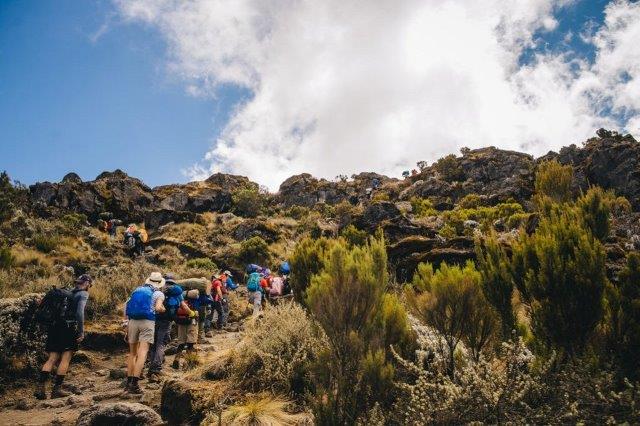
Today begins with awe-inspiring views of Kibo illuminated by the early morning sun. The day’s trek commences similarly to the previous day, with an easy ascent along a gentle slope. However, the landscape gradually transforms, and the trail becomes progressively steeper.
Previously, this section of the trail was adorned with a plethora of giant senecios, but a recent fire ravaged much of this vegetation. While a few senecios are beginning to regenerate, the remaining vegetation is expected to dwindle soon.
As the path steepens, anticipation builds for the impending arrival at the next campsite. Today’s journey is relatively short, with lunch scheduled at the campsite.
The Mawenzi Tarn Campsite awaits, nestled beneath the striking peak of Mawenzi, nestled in a sheltered hollow beside a picturesque lake. This campsite is renowned as one of the most breathtaking on the mountain, offering stunning vistas of the surrounding landscape.
In the afternoon, following a satisfying lunch and some well-deserved rest, an acclimatization walk provides an opportunity for exploration. Several paths wind their way up the ridges and towers of Mawenzi, affording panoramic views across the saddle towards Kibo.
Climbing Mt. Kilimanjaro – Rongai Route – Day 4
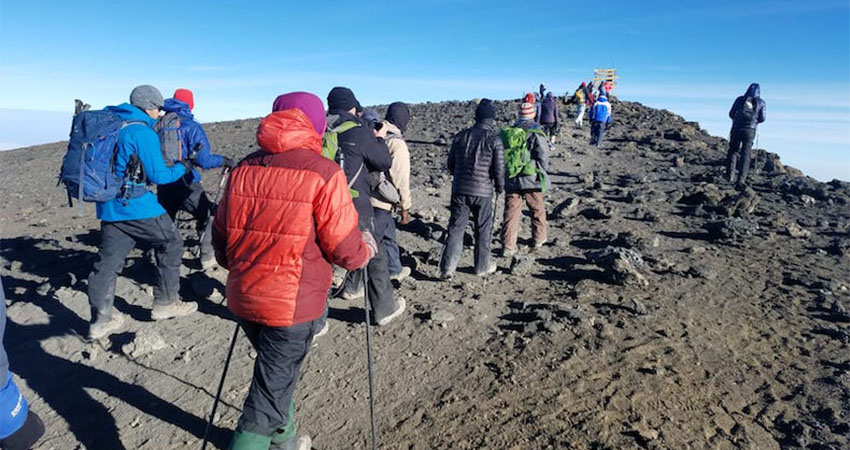
Today marks a significant change in direction as you begin your journey back towards Kibo, initially ascending over a small ridge before traversing along a comfortable path on the northern side of “The Saddle.”
If the weather permits, the panoramic views from this vantage point will be breathtaking, particularly when you catch your first glimpse over the ridge.
The saddle, a desolate expanse of alpine desert nestled between Kilimanjaro’s two primary peaks, Mawenzi and Kibo, stretches before you. Amidst the stark landscape, only tenacious grasses and occasional everlasting flowers cling to life.
The terrain here can be both dramatic and windswept, with expansive skies and imposing boulders providing opportunities for contemplation and rest. Many trekkers find this portion of the journey quite enjoyable, provided they are adequately acclimatized.
Following yesterday’s acclimatization day, most climbers feel well-prepared for today’s trek, which is relatively straightforward until reaching the final stretch leading to the Kibo Huts. As you ascend towards the huts, the incline becomes steeper, the air thinner, and the effects of altitude more pronounced.
Throughout the journey, your gaze remains fixed on Kibo, offering a constant reminder of the challenge that awaits you tonight. Arriving at the Kibo Huts around lunchtime affords ample opportunity to refuel, rest, and further acclimatize.
Just before reaching the huts, you’ll merge onto the well-trodden path of the Marangu route, underscoring the remoteness of the preceding days.
While the Kibo Huts themselves may lack scenic appeal, the campsite, located slightly below, offers captivating views back over the saddle.
As evening descends, indulge in an early dinner and retire early in anticipation of the monumental night ahead—the culmination of your Kilimanjaro ascent.
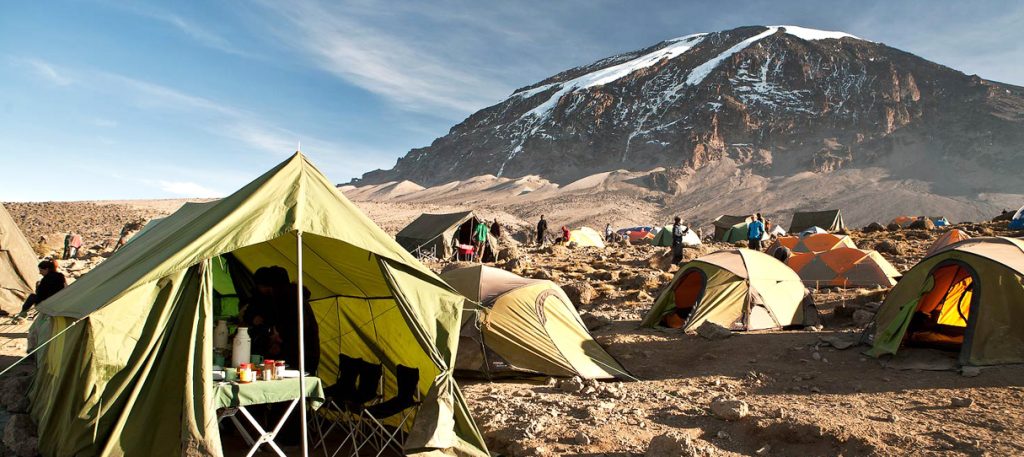
You are sharing the summit trail with the climbers from the Marangu route. Read on about summitting Kilimanjaro when climbing the Rongai/Marangu Route.