
The Best Route
Which is the Best Route for You?
Mt. Kilimanjaro Climbing Routes – Which is the Best for You?
The six Mount Kilimanjaro climbing routes differ not only in length, cost, and scenery but also in difficulty levels and success rates. Choosing a Kilimanjaro climb route is a critical decision, as it significantly impacts your climbing experience.
There is no single best Mt. Kilimanjaro climb route; the most suitable one for you depends on various factors, including available time and budget, prior experience and fitness level, the time of year, and personal preferences.
Let’s explore each Kilimanjaro climbing route and who they are suitable for:
- The Marangu Route: This is the only Kilimanjaro climb route that provides hut accommodation.
- The Machame Route: Known as the most popular climbing route up Kilimanjaro.
- The Rongai Route: Considered the easiest route on Kilimanjaro.
- The Shira Route: This route quickly ascends to high altitudes on the first day.
- The Lemosho Route: Renowned as the most beautiful Kilimanjaro climb route, though it tends to be expensive.
- The Umbwe Route: Regarded as the most challenging and demanding route on Kilimanjaro, offering spectacular views.
The Marangu Route
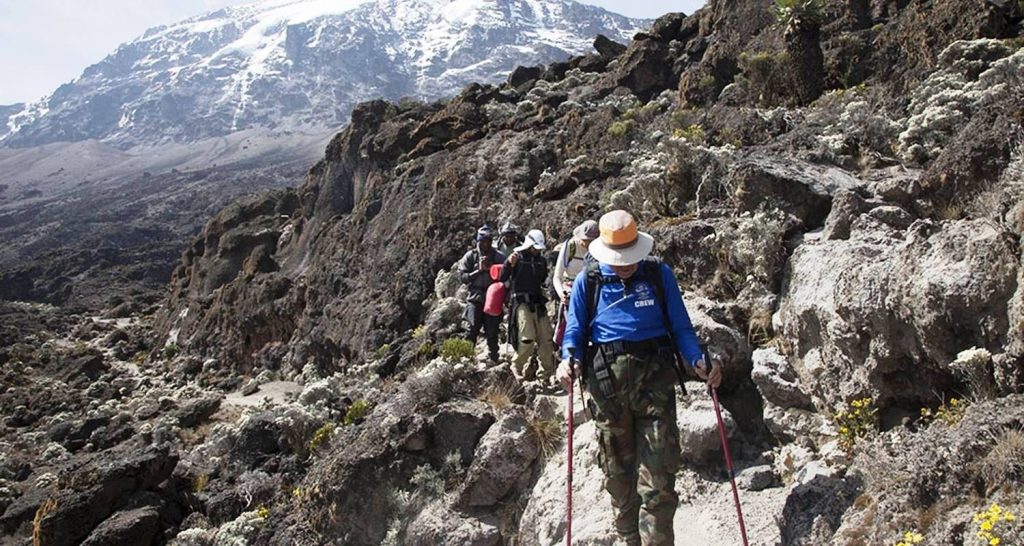
The Marangu Route is humorously dubbed the “Tourist Route” or “Coca-Cola Route” for a couple of reasons. Firstly, its popularity makes it somewhat touristy, and it’s the only route that employs the same path for both ascent and descent, making it the most crowded on Kilimanjaro.
The Marangu Route offers a comfortable walking path with a gradual slope, especially until reaching the last camp, earning it a reputation as an “easy” route. However, this also attracts unprepared climbers, hence the “Tourist Route” moniker. Additionally, the presence of sleeping huts along the route, where refreshments like Coca-Cola are sold, contributes to its nickname.
While the Marangu Route may seem comparatively inexpensive due to not requiring camping equipment and offering shorter climb durations, it’s not to be underestimated. Success rates are low due to factors like insufficient acclimatization time, lower-quality services from budget operators, and a challenging final ascent day.
Despite its drawbacks, some climbers choose the Marangu Route for its hut accommodations, especially if they prefer not to camp. Others opt for it due to budget constraints, although they should be aware of the reduced chance of success and consider adding an extra acclimatization day.
The Machame Route
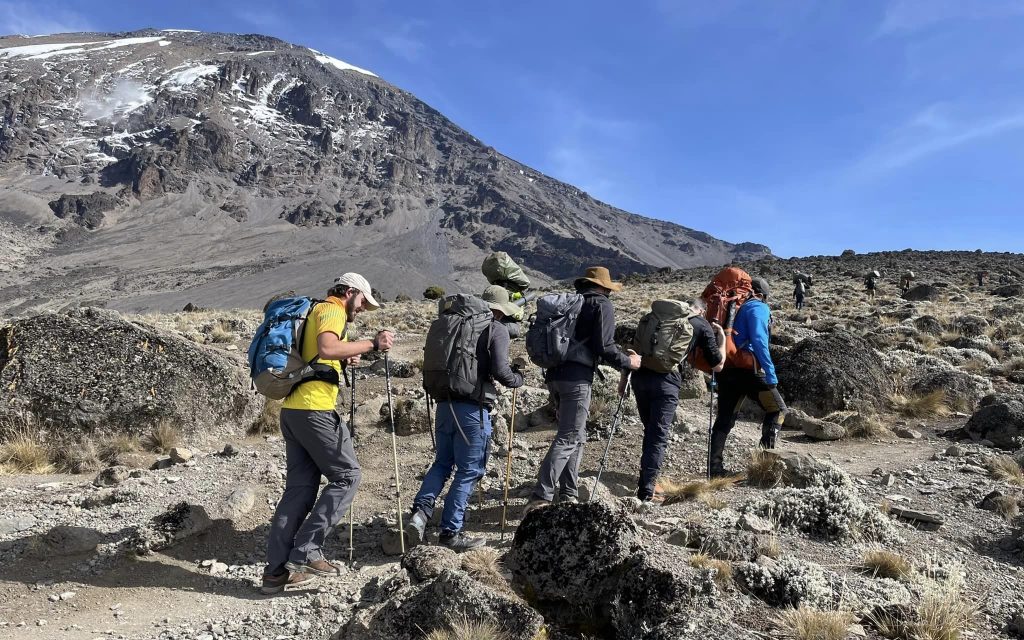
The Machame route, also known as the “Whiskey Route,” stands in contrast to the “Coca Cola Route” Marangu, offering a tougher ascent.
While Machame presents more challenges, it boasts higher success rates, particularly with the seven-day option. Approximately 60% of climbers reach the summit, with over three-quarters making it to the crater rim.
The seven-day itinerary allows for ample rest and acclimatization before the summit attempt, addressing one of the main issues faced by shorter routes. However, the six-day version shares a similar challenge with Marangu in terms of acclimatization.
Although not technically difficult, Machame demands more physical effort due to its steeper sections and varied terrain, including valleys and ridges. The Barranco Wall, a steep climb requiring occasional hand use for balance, adds to its adventurous nature.
Camping throughout the journey is another characteristic of Machame, which can be demanding, especially in adverse weather conditions, particularly with budget operators.
Despite its challenges, Machame offers breathtaking scenery, including the Shira Plateau, Lava Tower, and Barranco Wall, making it the most scenic route on Kilimanjaro. Its popularity has led to lower prices but also increased crowding.
For those comfortable with extended hiking in rugged terrain, enjoy camping and nature, and have budget constraints, Machame may be the preferred Kilimanjaro route, albeit with the caveat of dealing with crowds.
The Rongai Route
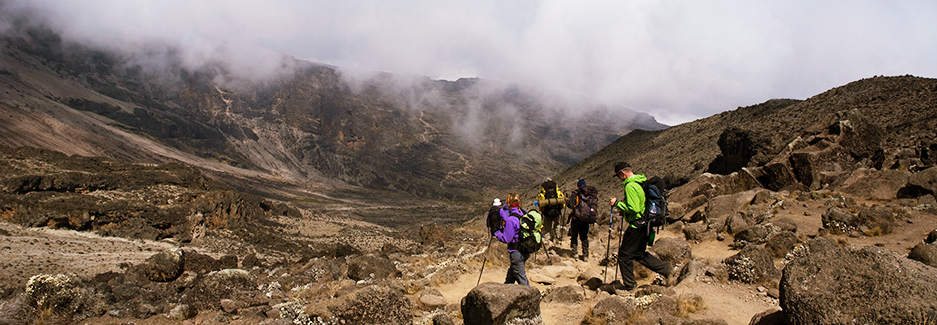
The six-day version of the Rongai route, via Mawenzi Tarn, is a top choice for climbers seeking an easier ascent with high success rates, away from crowds, and offering stunning scenery and a wilderness ambiance. Despite being slightly pricier, it provides a unique experience.
Distinguished as the only route approaching Kilimanjaro from the north, the Rongai route descends in the southeast via the Marangu route, allowing trekkers to witness both sides of the mountain.
The added transportation expenses contribute to the higher cost of a Rongai climb, along with the lower demand and fewer budget operator options.
While the Rongai route may be perceived as less scenic compared to others like Machame, it still offers spectacular views, particularly in the later stages of the trek. The camp beneath Mawenzi Peak stands out as one of the most picturesque on the mountain.
Wildlife sightings are also possible on the Rongai route, adding to its allure.
Similar to the Marangu route, the Rongai ascent follows an easy, gradual profile without steep climbs or major elevation changes. However, camp placements are better spaced, allowing for a more comfortable acclimatization process.
With a reputable operator, climbers have an 80-90% chance of reaching the crater rim and 70-80% chance of reaching Uhuru Peak. Those with trekking experience may even achieve a 90% success rate, barring weather conditions, individual preparation, altitude tolerance, or unforeseen incidents.
An important advantage of the Rongai route is its drier climate on the northern side of Kilimanjaro, reducing the likelihood of getting soaked, particularly during wetter periods of the year. This makes Rongai a sensible choice for climbers seeking to avoid rain during their ascent.
Overall, the Rongai route offers a rewarding and less crowded Kilimanjaro experience, with favorable success rates and stunning scenery.
The Shira Route
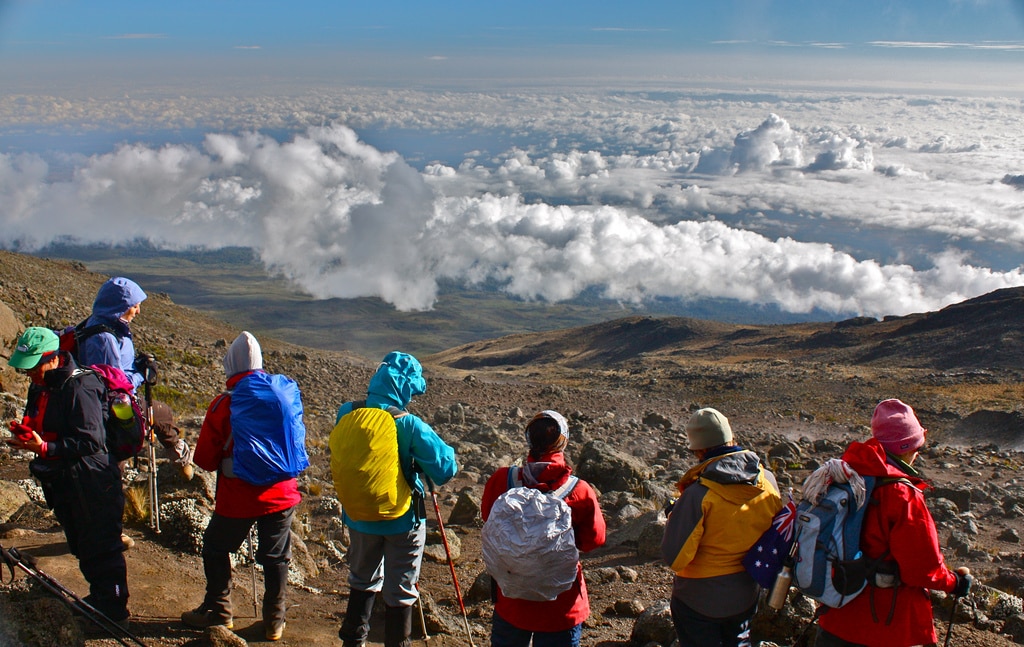
The Shira route, approaching Kilimanjaro from the west before merging with the Machame route, shares many characteristics with its counterpart. Most aspects discussed regarding the Machame climb route are applicable to Shira as well.
Offering several variations, Shira can be completed in six days, although longer versions are also available from most operators. A well-organized operator will strategically plan departure times and camp placements to avoid peak traffic on the Machame trail, enhancing the overall experience.
However, the Shira route may incur higher costs due to transportation expenses and longer itineraries. On the first day, trekkers encounter a deviation from typical climb routes as they traverse a four-wheel-drive track. Participants can either walk along the road or opt for vehicular transport, skipping the initial rainforest zone and rapidly ascending to over 3500 m (11500 ft) without adequate acclimatization time.
This sudden altitude gain can be challenging, particularly for individuals arriving from sea-level locations shortly before the climb.
Despite this initial hurdle, the Shira route boasts excellent success rates, especially when itineraries include a night at Karanga Valley, facilitating a shorter and more manageable day before the summit push. However, the route’s success is partially attributed to the higher caliber of operators, distinguishing themselves from those on more crowded routes.
Similar to the Machame route, Shira appeals to confident hikers comfortable navigating challenging terrain and camping for extended periods. Although less congested, it is a pricier option, and participants should be mindful of their response to altitude changes, especially on the first day.
Overall, the Shira route offers a less crowded and rewarding Kilimanjaro experience for those willing to invest in a higher-quality climb.
The Lemosho Route
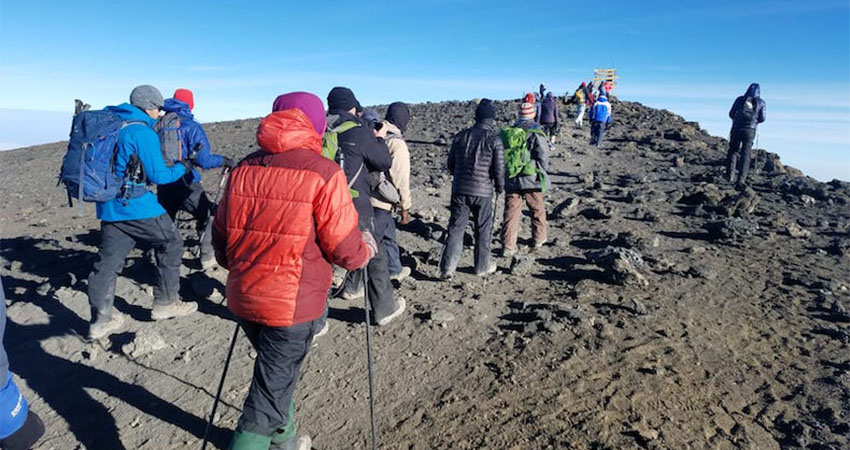
Similar to the Shira and Machame routes, the Lemosho route also approaches Kilimanjaro from the west before converging with the Machame trail. Consequently, much of the information applicable to the Machame climb route is relevant to Lemosho as well.
The initial two days on the Lemosho route guide trekkers through stunning and secluded rainforests, offering ample opportunities for wildlife sightings. The trail’s outset, known as the Lemosho Glades, sets a picturesque tone for the journey.
Typically extending over seven or eight days, Lemosho offers various itinerary options, with the choice often dictated by the trekking operator. A top-tier operator will strategically plan departures and camp arrangements to minimize congestion on the Machame trail, enhancing the overall experience.
Due to its length, remote setting, and additional transportation costs, Lemosho tends to be a pricier option. However, the extended duration and absence of budget operators contribute to outstanding success rates, rendering it a popular choice among climbers.
Lemosho appeals to confident hikers accustomed to challenging terrain and extended camping excursions, prioritizing a premium wilderness experience over cost considerations.
In essence, the Lemosho route promises a remarkable Kilimanjaro adventure for those seeking pristine wilderness and willing to invest in a high-quality climb.
The Umbwe Route
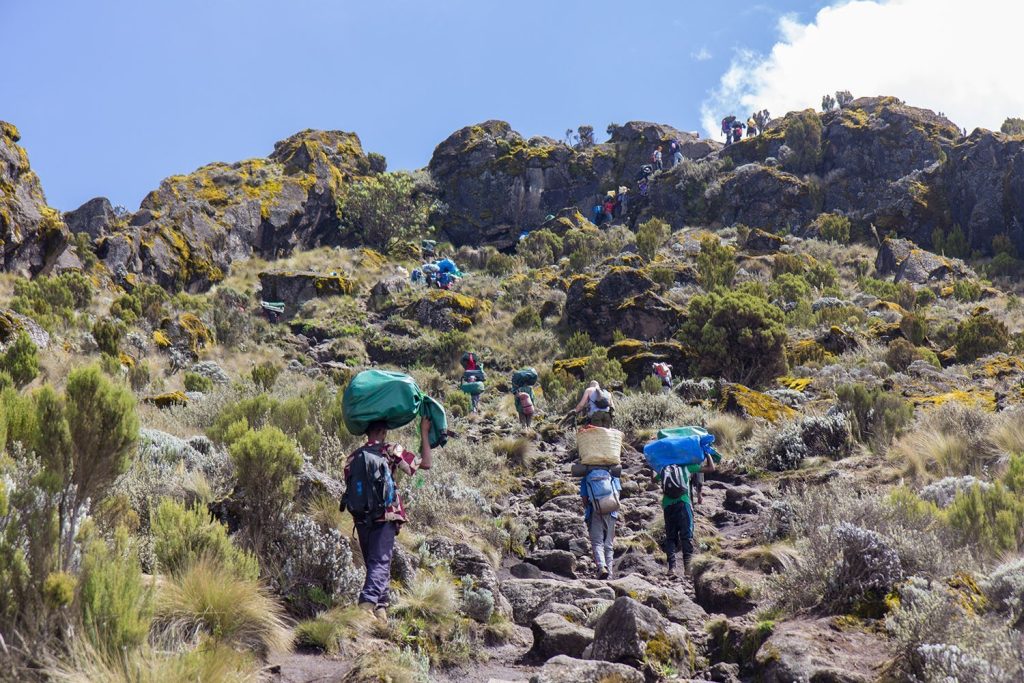
The Umbwe Route may not be technically challenging, but it is characterized by its direct, steep, and demanding nature, with sections that are particularly exposed.
Joining the Machame route near the Barranco Camp on the second night—while on other routes, this camp is typically reached on the third or fourth night—illustrates the significantly steeper ascent of the Umbwe route.
The trail on the first day is so steep that tree roots serve as makeshift steps, aiding climbers in navigating the terrain. These roots also double as handholds for pulling oneself up when necessary.
Day two continues the steep ascent, with the exposed ridge posing challenges for those uncomfortable with heights. The moniker “Rope Rock” (Jiwe Kamba) hints at the necessity of ropes in certain areas, emphasizing the route’s demanding nature.
Undoubtedly, the Umbwe Route stands as the most difficult and arduous of all Kilimanjaro climb routes, requiring prior mountain climbing experience for safe traversal.
Despite its challenges, the Umbwe Route offers a truly spectacular journey for those equipped with the necessary skills and experience.